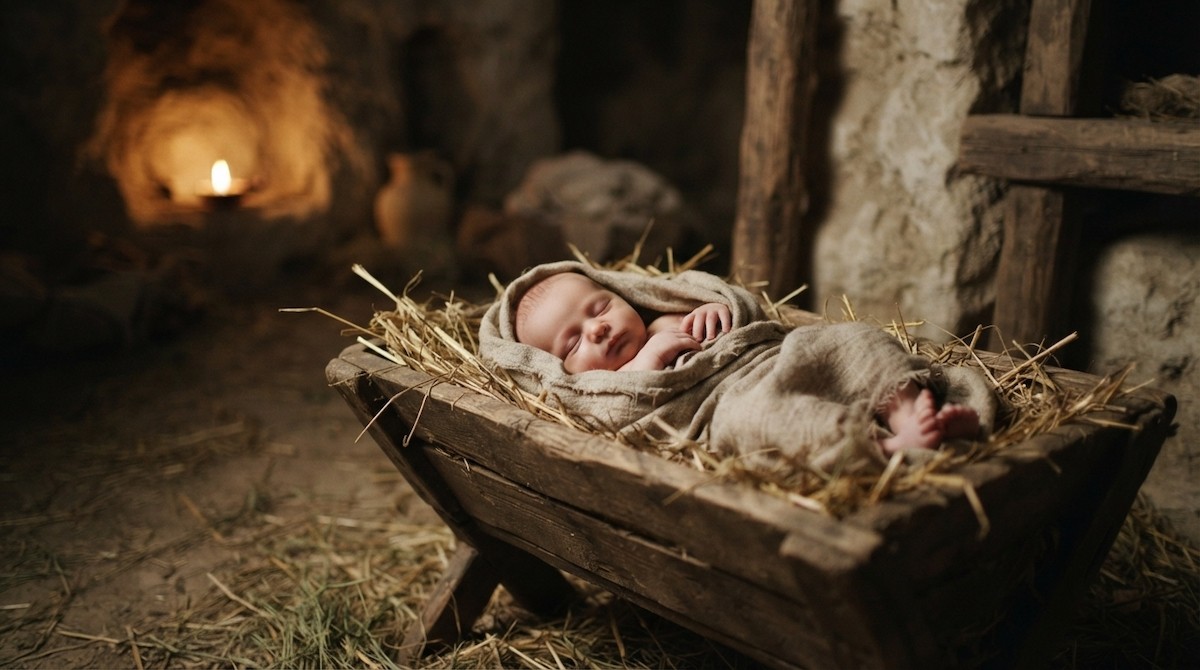
“And they came with haste, and found Mary, and Joseph, and the babe lying in a manger.” (Luke 2:16)
No, I don’t want to start Christmas early. Consider the above verse, though, without the sound of carols, the image of that special wreath, or the aroma of your favorite holiday dish.
The four gospels give us four views of Christ. Matthew offers hope especially to those who treasure Israel. Matthew 1:1 assures us that Jesus Christ is “the son of David” and “the son of Abraham.” He’s the ultimate connection to Israel. Mark affirms to the gentile that Jesus Christ is the mighty “Son of God” and is the embodiment of the gospel. (Mark 1:1) Those who look for a Jesus who can take on the Roman Empire, and also meet the needs of the twenty-first century heart, find him in Mark’s Gospel. John’s Gospel answers a weighty question: “Is Jesus God?” John 1:1 declares an emphatic “yes.” The Word (John’s expression for Christ) was “in the beginning,” was “with God,” and “was God.”
Luke also has his view. As powerful as the other three, it asks another weighty question: “Is Jesus Man?” Luke 2:16 answers that question by painting a beautiful picture at the manger scene. First, we’re introduced to shepherds. They were real people. Rough and ready, they “found Mary and Joseph,” and the first-time parents looked, no doubt, tired from their ordeal (travel, lodging issues, taxation, and the nagging question of how to parent God in the flesh.) The shepherds also found “the babe lying in a manger.” What did they see? Olive-skinned limbs and face, tiny ears, ten little toes: a fully human Israelite baby.
The four Gospel writers give a full account of Jesus which includes his blazing deity, staggering wisdom, unique teaching, and unparalleled interactions with people. In Luke 2:16, however, the shepherds see a harmless baby like other babies. Everyone in the verse is very human. The baby in the manger is also very God.
Luke’s view completes the picture. Jesus is fully God and fully man. His humanity means he can identify with us and understand us. May we turn to him with haste as did the shepherds.