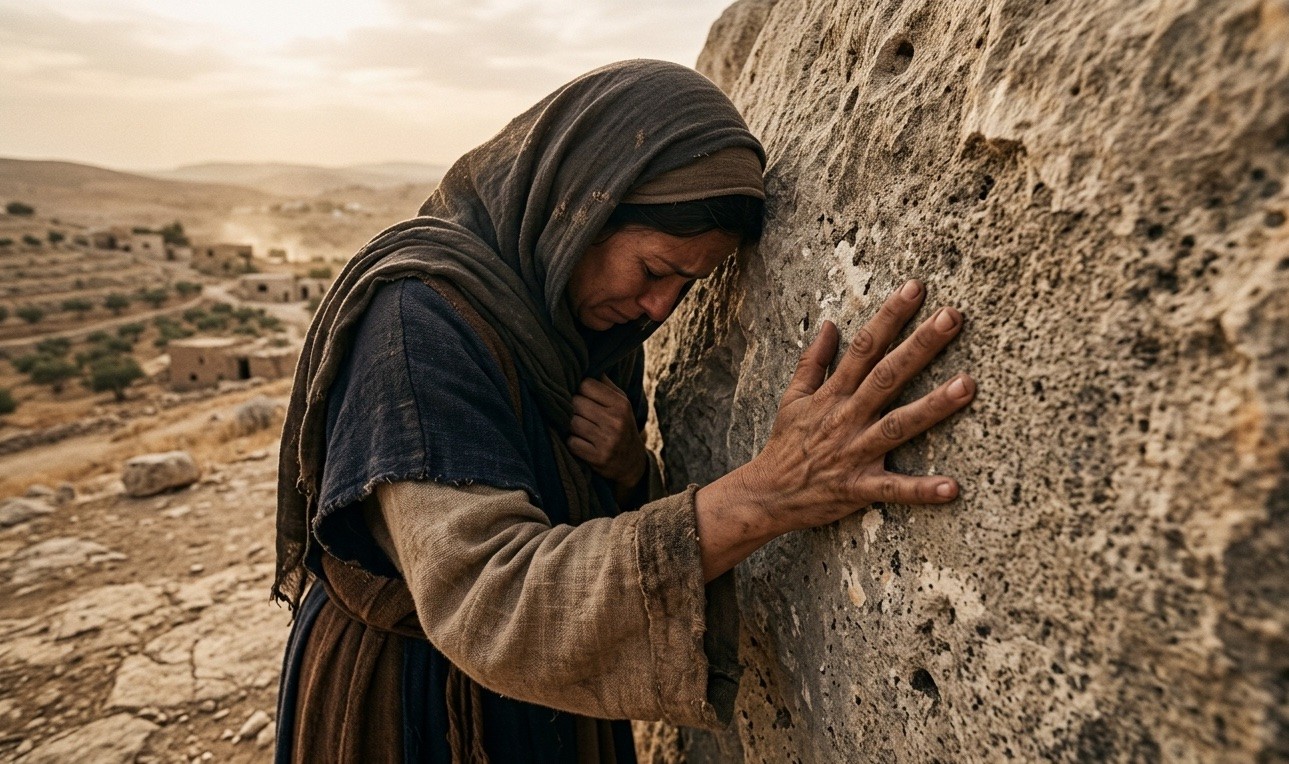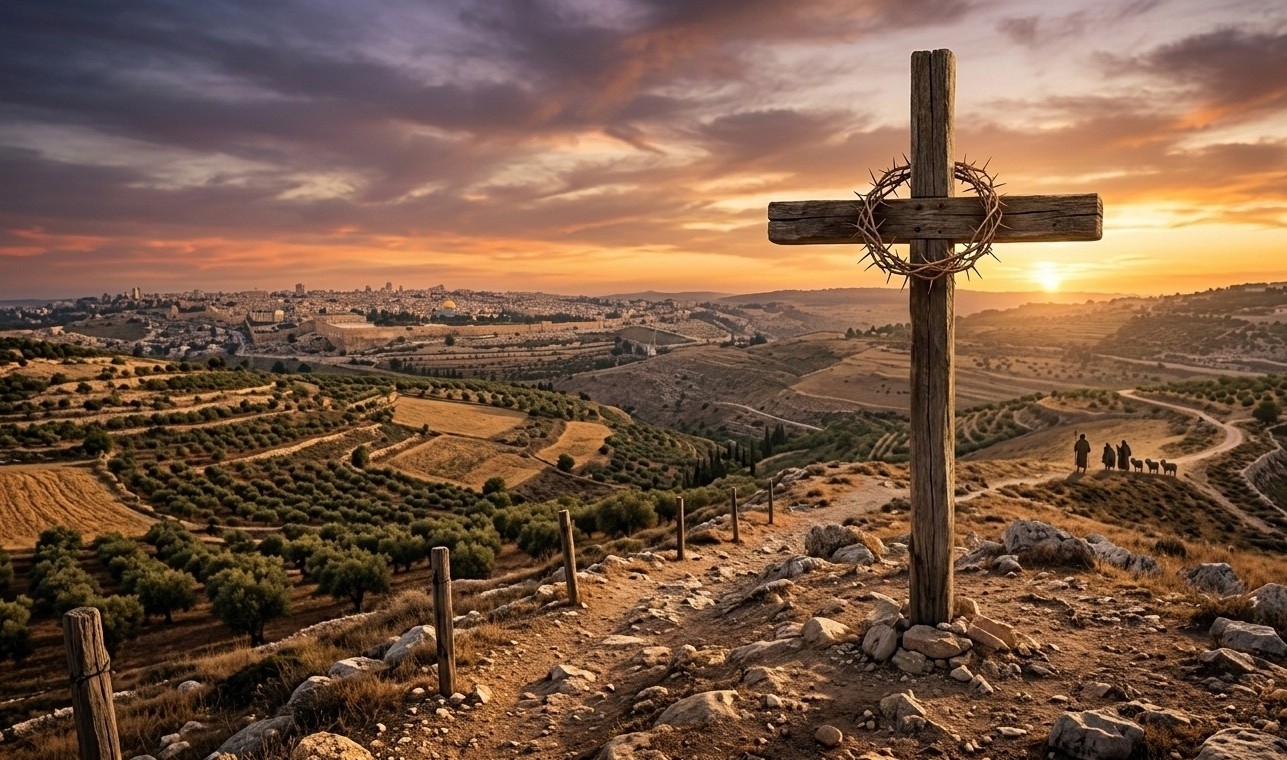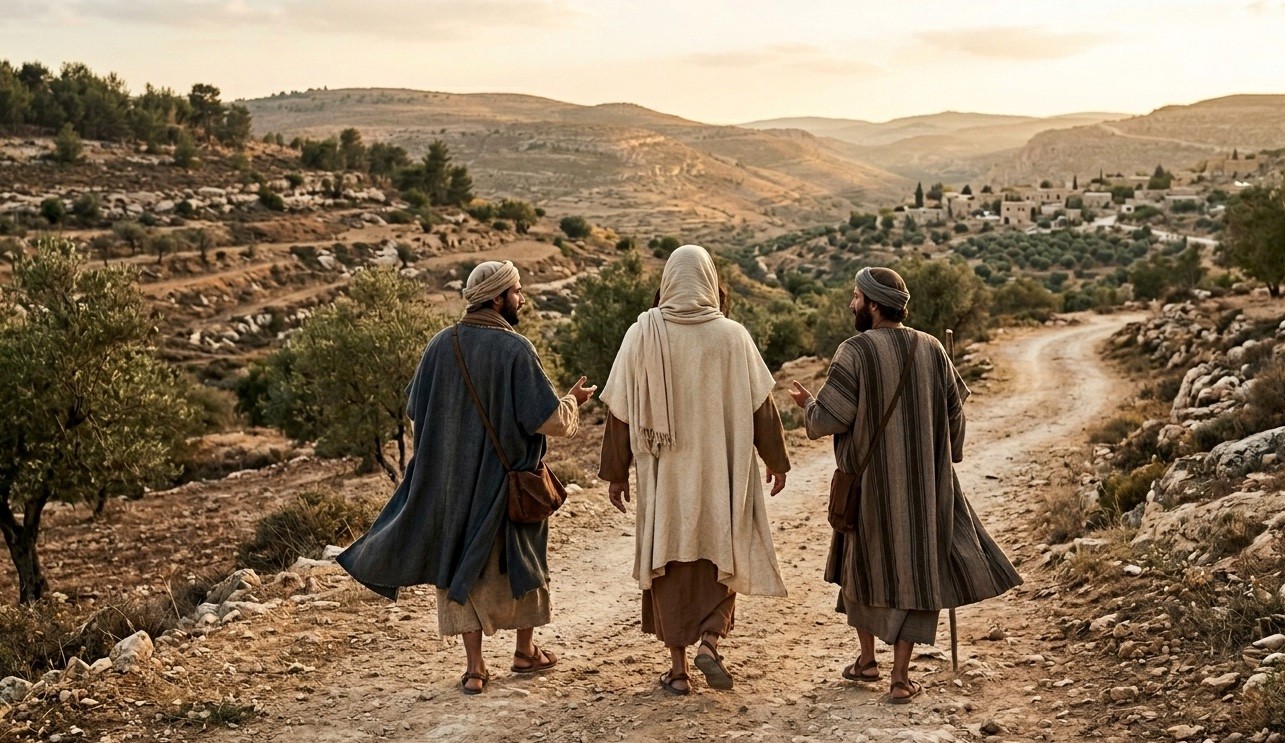
Two men were on the road to Emmaus. They had just lived through the saddest day of their lives. The One they had hoped was the Messiah had just been put to an unspeakable death, and they wanted to get out of Jerusalem. Their world had just fallen apart there. So they had a long walk on this day to the distant village of Emmaus, about six and one half miles from Jerusalem (sixty furlongs, a furlong being 582 feet). The two of them had a good long talk about what had just happened back on Calvary. There must have been a number of questions they asked each other. We’re not given the specifics of their conversation, but there must have been issues that they wrestled with. Perhaps among the questions they asked or discussed were issues like: Who do we believe in now? What do we build our lives around now? Where will tomorrow lead? Why did He leave us? When will our lives ever make sense again?
Luke 24 gives the rest of the story. A stranger came, walked with them, and contributed to their conversation. They didn’t understand that it was Jesus, thinking Him a well-disguised stranger for whatever reason. The story tells how they compelled Him to come with them for supper, that He prayed, and then disappeared. Then, in v. 32, we read the last question recorded of the event: “Did not our hearts burn within us, when he talked with us by the way, and while he opened to us the scriptures?” Holy heartburn. Eyes opened wide in amazement. The news burned within them so much that they knew it was too good to keep to themselves, so they hurried back to Jerusalem, retracing the six and a half mile journey they had just ended. But this time they had more answers than questions. And their world would never be the same again.
Steve Green, a gospel artist, once sang a song whose lyrics in part were, “Somewhere between where you are and Emmaus, the Saviour wants to walk with you.” The story, the song, and its message still speak to us today. After Emmaus, the two men learned to walk toward what made sense: following the risen Christ. They welcomed the stranger of Galilee, as should we. His appearance there – and in our lives when we believe on Him by faith – is not happenstance. He wants to put the pieces of our lives back together again. But we must invite Him into our hearts, as they did with their house. Then, after He has taught us, we must go back and tell others the good news, as they did at Jerusalem. We, too, must become His witnesses, “For we cannot but speak the things which we have seen and heard.” (Acts 4:20)
We who know Him all have our Emmaus experiences. Let us follow Luke’s example here and tell others about them, as we are commanded. The King is real; He is alive; He is coming again. The word Emmaus means: “hot baths” or “warm springs.” And, after all, every Christian could use a good bath in those waters.