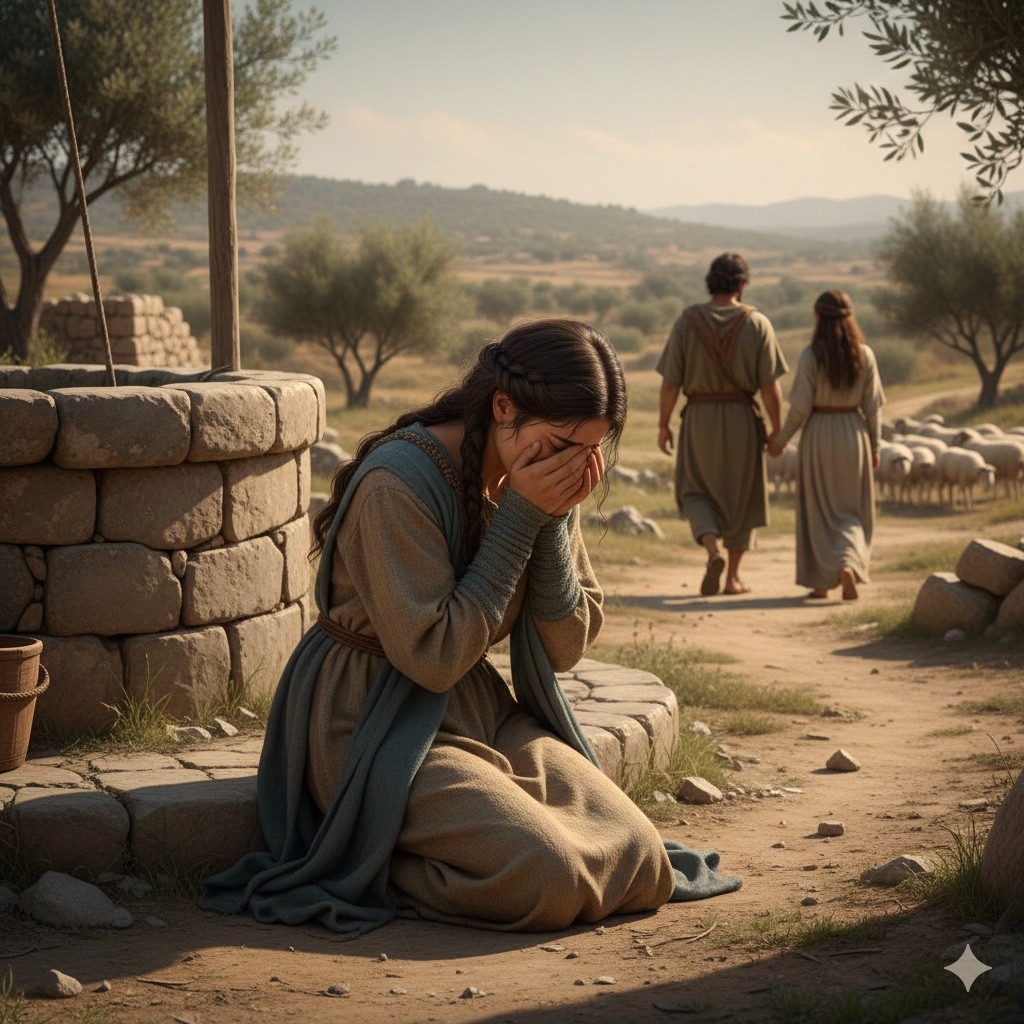
Genesis 29:30-35 “And he went in also unto Rachel, and he loved also Rachel more than Leah, and served with him (Laban) yet seven other years. And when the LORD saw that Leah was hated, he opened her womb: but Rachel was barren. And Leah conceived, and bare a son, and she called his name Reuben: for she said, Surely the LORD hath looked upon my affliction; now therefore my husband will love me. And she conceived again and bare a son; and said, Because the LORD hath heard that I was hated, he hath therefore given me this son also: and she called his name Simeon. And she conceived again and bare a son; and said, now this time will my husband be joined unto me, because I have born him three sons: therefore, was his name called Levi. And she conceived again, and bare a son: and she said, now will I praise the LORD: therefore, she called his name Judah; and left bearing.”
Leah’s story is often told as a tragedy because she was caught between Jacob’s love for Rachel and the weight of her own longing to be chosen. But when we look deeper, we see that Leah wasn’t a mistake in Jacob’s story. She was a miracle in God’s plan. While Jacob’s eyes were fixed on Rachel, God’s eyes were on Leah. While she was fighting for a man’s affection, God was already fighting for her true purpose. In the beginning of her struggle for acceptance by her husband, God was working a greater purpose in her life.
Every child she bore carried the echo of her ache, “Maybe now I’ll be loved.” Her first son was Reuben, then Simeon, and her third son was Levi. Levi's descendants would become the priestly class.
But somewhere between her tears and her prayers, Leah’s heart shifted. By the time she named her fourth son Judah, (meaning "praise") she no longer spoke of being seen or loved by Jacob. She simply said, “This time I will praise the Lord.”
And that’s when everything changed. From the womb of the “unloved wife” came the tribe of Judah and from Judah came Jesus, the Savior of the world. Leah may not have had Jacob’s affection, but she had God’s attention. She may not have been the one Jacob chose, but she was the one God used to carry the lineage of redemption. Through Leah’s son, Judah, would be born the Savior.
There is irony in this story too. When Jacob died, he was buried next to Leah.
Leah's story reminds us that God often works through the overlooked. And, that the ones hidden in the shadows of comparison are sometimes the ones carrying Heaven’s greatest promise.
Leah teaches us that we don’t need to be someone’s favorite to be chosen by God; because, when the world overlooks you, God whispers, “I see you. I chose you. And I can write eternal salvation through your tears.”